Assessment-1
| Assessment type | Activities | Individual |
|---|---|
| Length | 100-500 words (+/-10%) |
| Weighting | 20% |
| Due date | Weeks 2-5 |
Overview
This ongoing assessment task is designed to foster active and applied learning, deepening your engagement with the course material through practical application, critical reflection, and discussion. Throughout the semester, you will be tasked with the following:
Application of Concepts: Applying theoretical digital marketing concepts, strategies, and tools from course modules to real-world scenarios or case studies. This component emphasizes problem-based learning, where you will develop viable solutions to digital marketing challenges.
Discussion: Actively participating in online or in-class discussions, sharing your insights, debating different approaches, and engaging with your peers and facilitators. This component cultivates effective communication, collaborative problem-solving, and the ability to articulate complex ideas clearly and persuasively.
These are continuous tasks that you will complete as we progress through the course modules. Collectively, these activities aim to enhance your ability to apply advanced digital marketing principles, think critically about industry developments, and communicate effectively within a professional context.
Learning Outcomes
The targeted Course Learning Outcomes (CLOs) for this assessment are:
CLO1: Critically analyse the complexity of the digital marketing landscape to communicate strategic insights to specialist and non-specialist audiences.
CLO5: Critically reflect on learning and the application of digital marketing concepts to scenario-based challenges and changing industry trends.
Marking Criteria
| Criteria | High Distinction (HD) 80-100% | Distinction (DI) 70-79% | Credit (CR) 60-69% | Pass (PA) 50-59% | Fail (NN) 0-49% |
|---|---|---|---|---|---|
| 1. Digital Marketing Strategy and Planning | Demonstrates a sophisticated and comprehensive understanding of digital marketing principles. The strategy is innovative, clearly articulated, and perfectly aligned with the target audience and business objectives. All elements are seamlessly integrated. | Demonstrates a strong and thorough understanding of digital marketing principles. The strategy is well-developed, clearly explained, and highly relevant to the target audience and business objectives. Most elements are well-integrated. | Demonstrates a good understanding of digital marketing principles. The strategy is clear, effective, and mostly relevant to the target audience and business objectives. Some elements are integrated. | Demonstrates a basic understanding of digital marketing principles. The strategy is adequate and shows some relevance to the target audience and business objectives, but may lack detail or clarity. | Fails to demonstrate a basic understanding of digital marketing principles. The strategy is unclear, irrelevant, or incomplete. |
| 2. E-commerce Website Management & User Experience (UX) | The e-commerce website is exceptionally well-managed, offering a seamless, intuitive, and highly persuasive user journey from landing page to checkout. Demonstrates sophisticated use of features to maximize conversions. The site is fully optimized for all devices. | The e-commerce website is professionally managed, user-friendly, and visually appealing. The user journey is clear and logical. Effective use of standard e-commerce features enhances the customer experience. The site functions well across different devices. | The e-commerce website is functional and easy to navigate. The path to purchase is clear. Product information is sufficient and key e-commerce features are implemented correctly. The site is mobile-responsive but may have minor display issues. | The e-commerce website is functional but may have some usability issues or an unrefined design. The user journey is mostly clear but could be improved. Basic e-commerce features are present but may be underdeveloped. | The e-commerce website is poorly managed, difficult to navigate, or has significant functional errors. The user experience presents major barriers to conversion. |
| 3. Social Media Marketing | The social media strategy is innovative and demonstrates a deep understanding of platform-specific best practices. Content is exceptionally engaging and fosters a strong sense of community. There is a sophisticated use of social media tools and analytics. | The social media strategy is well-developed and demonstrates a strong understanding of different platforms. Content is engaging and effectively targets the desired audience. There is a proficient use of social media tools and analytics. | The social media strategy is clear and demonstrates a good understanding of social media marketing. Content is appropriate and generates some engagement. There is a competent use of social media tools. | The social media strategy is adequate but may be generic or not well-integrated. Content is present but may not be engaging. There is a limited use of social media tools. | There is no clear social media strategy. Content is inappropriate or non-existent. There is no evidence of using social media tools. |
| 4. Analytics and Reporting | Provides a comprehensive and insightful analysis of key metrics. The report is professionally presented and clearly communicates campaign performance. Recommendations for improvement are innovative, data-driven, and highly actionable. | Provides a thorough and clear analysis of key metrics. The report is well-presented and effectively communicates campaign performance. Recommendations for improvement are insightful, data-driven, and actionable. | Provides a good analysis of relevant metrics. The report is clear and communicates the main points of campaign performance. Recommendations for improvement are relevant and based on the data. | Provides a basic analysis of some metrics. The report is adequate but may lack clarity or depth. Recommendations for improvement are present but may be generic or not well-supported by the data. | Fails to provide a meaningful analysis of metrics. The report is unclear, incomplete, or inaccurate. There are no relevant recommendations. |
Activities
Participate in all activities.
Description:
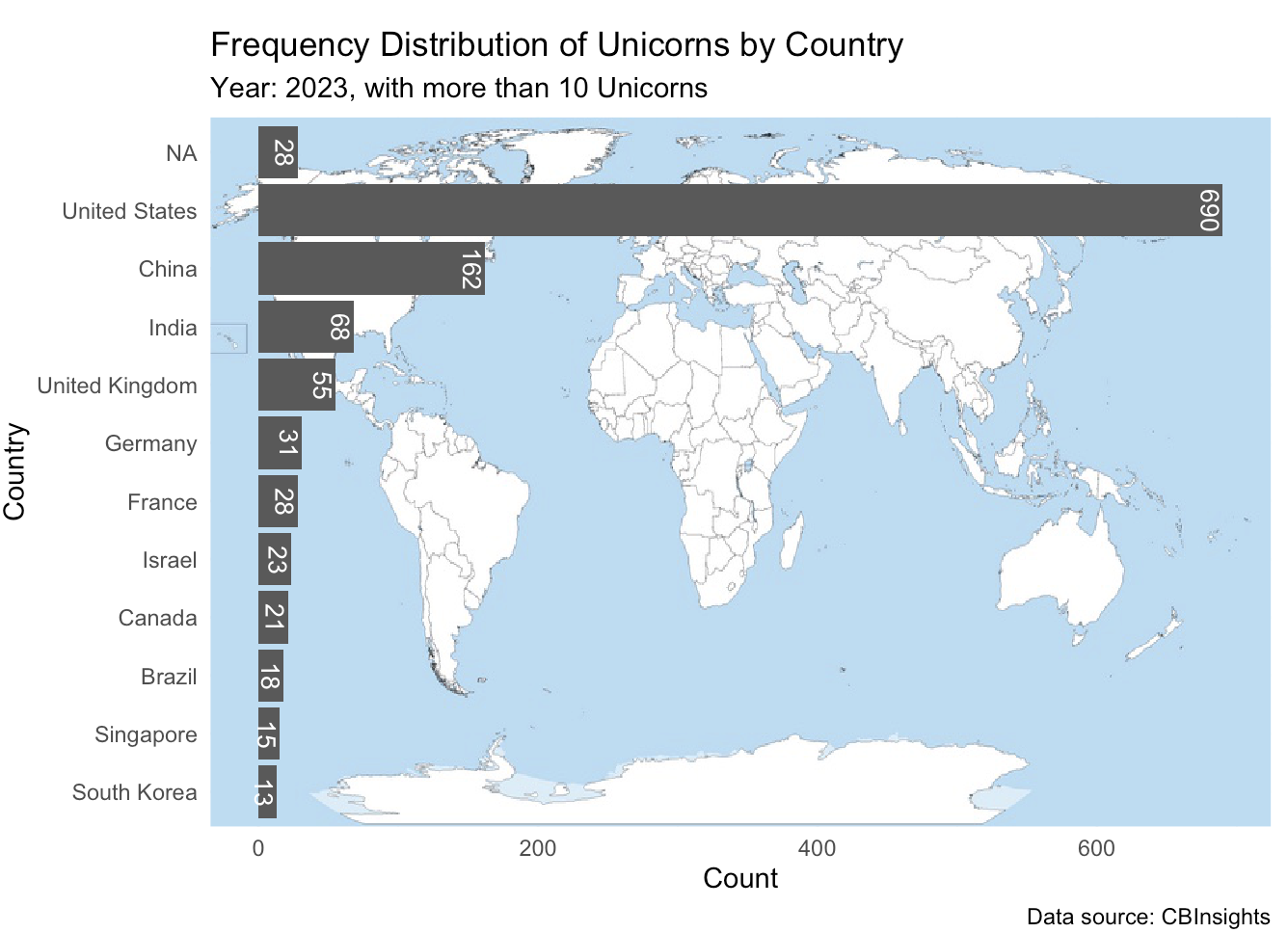
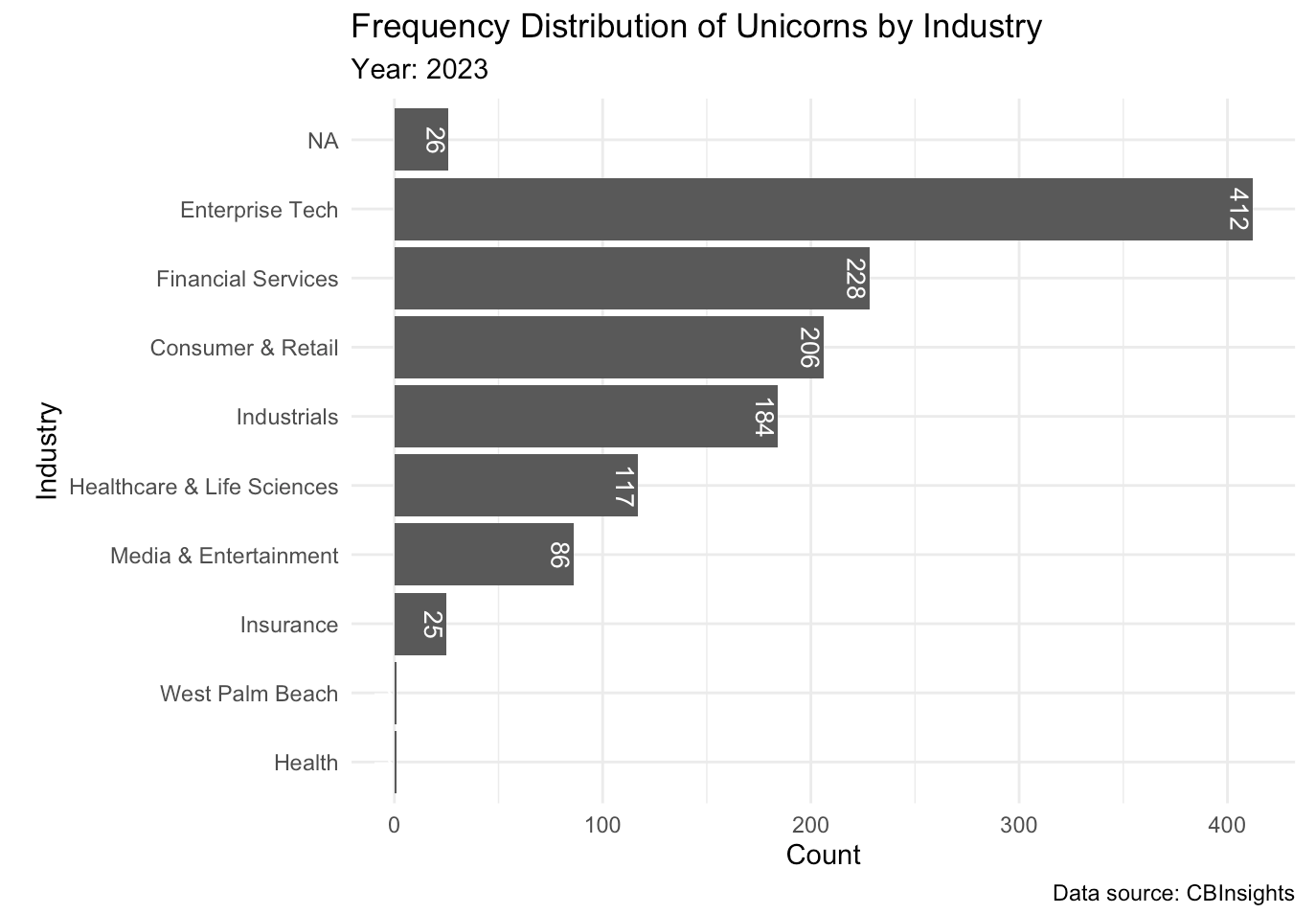
Analyze CB Insights (Its mission is to enable every organization to make smarter tech decisions) unicorn company data to understand how technology firms create business value and solve market problems through digital innovation. Explore the data to examine key patterns in company valuations, sectors, and geographic distribution. Also, critically examine the differences in technology-driven business models followed by these unicorns.
Link to the site: CBInsights
Task:
After conducting a preliminary investigation, your main task is to select one unicorn company and answer the following questions (Mentimeter link is provided).
- Company description
- Name
- URL
- Sector
- Market valuation
- Geographic location
- Business Problem Analysis
- The core business problem they solve
- How does the company use technology to solve that problem
- Digital Strategy Assessment
- Explain how the company is disrupting the market
- Explain how technology is helping in business value creation
Discussion/Feedback
Data analysis
| Distribution of Unicorns by Country | Distribution of Unicorns by Sector |
|---|---|
 |
 |
Task Analysis
A case study of Shien
Description
In this task, you will explore the Google Analytics (GA4) dashboard to monitor website performance. You are suggested (but not required) to use Google’s Looker Studio to generate a report. Go through the tutorial for first-time users. Please note that we are using the Google Merchandise Store as an example for an e-commerce website. You will need to create a Google account to access the dashboard and studio. You can access the dashboard for this site using a Google Demo account.
Task
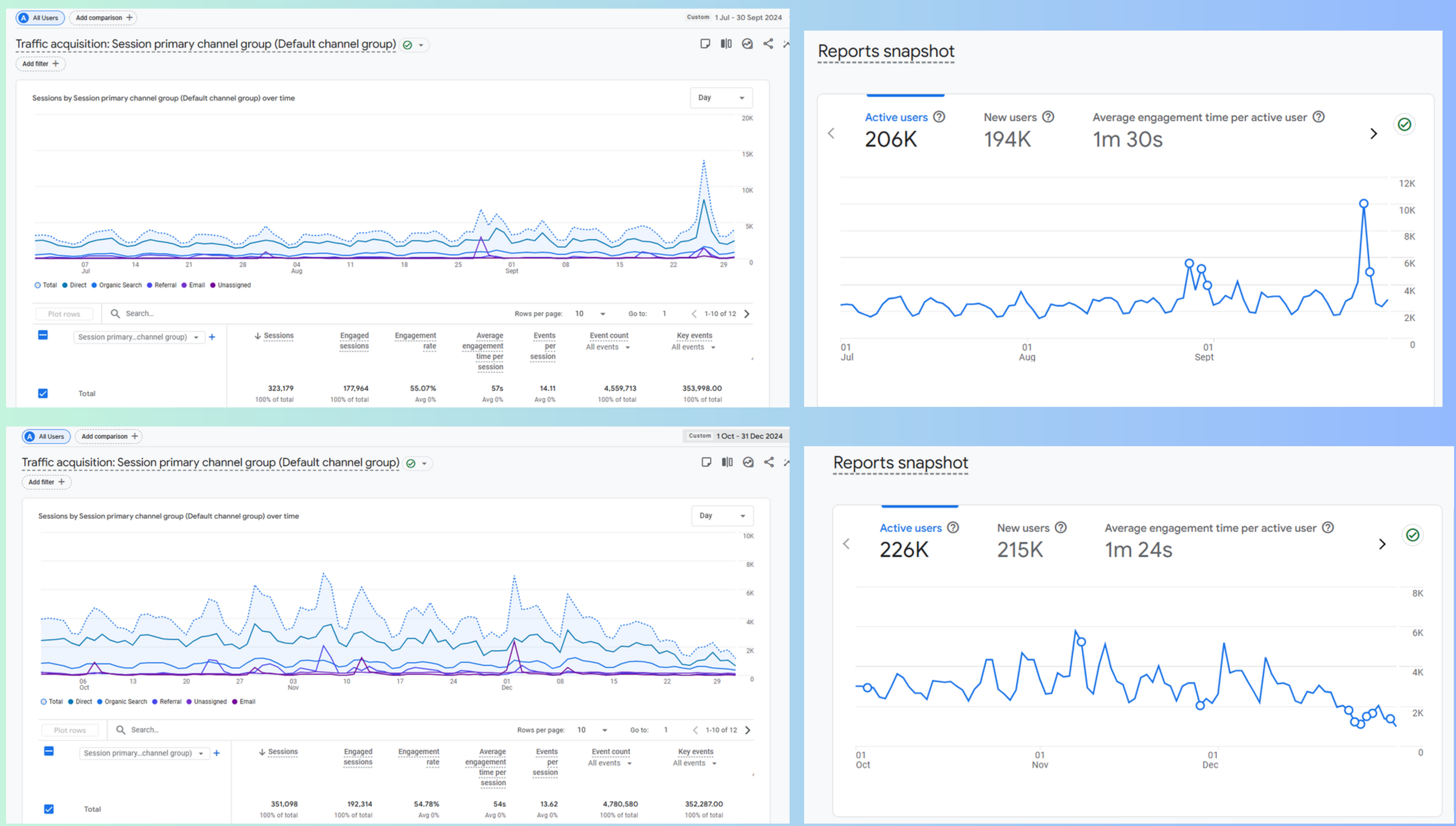
For this activity, you will assume the role of a data analyst tasked with creating a year-end performance report for your senior marketing manager. You must create and compare the Google Merchandise Store’s last two quarterly performances in 2024 (Q3-2024 and Q4-2024. The third quarter (Q3-2024) spans from July 2024 to September 2024, and the fourth quarter (Q4-2024) extends from October 2024 to December 2024) using one of the following criteria.
WEBSITE TRAFFIC CHART.
E-COMMERCE CONVERSION CHART.
AVERAGE ORDER VALUE.
WEB SITE TRAFFIC SOURCES.
WEBSITE VISITOR CHARACTERISTICS.
You will upload your report to padlet.
Discussion/Feedback
Website traffic:
Description
This activity involves applying generative AI (GenAI), where you will utilize large language models (LLMs) to generate content for social media marketing.
Motivation: Generative AI is revolutionizing digital marketing by automating processes, enabling hyper-personalization, and enhancing customer experiences. According to McKinsey (2023), generative AI could increase marketing productivity by 5-15% of total marketing spend, contributing up to $463 billion annually. This exercise motivates students to explore these cutting-edge tools and understand their practical applications in the business world.
Importance: Generative AI is transforming content creation by enabling faster, more efficient, and scalable production of marketing materials. For example, tools like Writesonic and Synthesia allow businesses to generate written and video content tailored to their brand voice, significantly reducing time and costs (Forbes, 2023). Additionally, companies like Buzzfeed have used GenAI to create personalized content, such as quizzes and recipes, enhancing audience engagement. By mastering these tools, students will gain a competitive edge in the job market and be prepared to implement innovative marketing strategies in their future careers.
Caution: While generative AI tools offer immense potential for automating and scaling content creation, they come with significant challenges and limitations. Over-reliance on these tools can lead to generic, uninspiring, or formulaic content that lacks the emotional depth and originality needed to connect with audiences truly. Generative AI, by design, works by analyzing existing data and patterns, which means it cannot generate genuinely new ideas or creative breakthroughs. As a result, content created solely by AI may fail to stand out in competitive markets.
In marketing, personal creativity remains irreplaceable. Human creativity brings emotional intelligence, cultural context, and innovative thinking that AI cannot replicate. Students should view generative AI as a tool to enhance their creative process, not replace it. By combining AI’s efficiency with their unique ideas and storytelling abilities, marketers can create content that is both impactful and authentic.
Task:
In this activity, you will use the following most popular LLMs to create social media content.
If you do not have existing accounts with these platforms, please create them before starting the task. If you are looking for a single platform that provides multiple LLMs in one place, please try out Abacus.AI, which acts as one AI assistant with access to all the top LLMs, web search, video, and image generators. AI coding assistant included.
The task has the following objectives.
Generating prompt based on given scenario.
Getting outputs from LLMs based on the selected prompt.
Ranking the quality of outputs from LLMs.
Scenario:
You are a social media marketing manager of Premier Group. The retailer is introducing a new wine from Tasmania, Australia, called Distant South Sparkling. The wine has been voted as The 13 best-value wines from the 2023 Decoded Wine Awards by Dan Murphy.
Tasks:
Creating Tweet: Your task is to create a tweet/post (in textformat only) that the retailer will post on its Twitter account. Ensure your post is no longer than 250 words.
Steps: The first step is to decide on the prompt to use on LLMs. Please note that you will use the same prompt across LLMs. The second step is to use this prompt to generate tweets on each LLM.
Discussion/Feedback
A sample output of the students’ responses from a past offering is here: Using LLM to Create Social Media Content.
Description
We introduce two core concepts in this activity.
Agentic LLM: It is a tool that acts autonomously to make decisions based on set goals. In this exercise, “agent” will be a market researcher.
Digital Twin: Think of a digital twin as a virtual representation of a real-world entity. In this exercise, we will use digital twins for customers, calling them “Customer Digital Twins.” Each twin is an LLM instance primed with a detailed persona, designed to react and respond as that specific customer type would.
Task
Your local coffee shop, Little Bang, is considering raising the price of its most popular drink, cappuccino, from $4.50 to $5.50 due to changes in economic factors. The manager is concerned about customer churn and wants to predict the reaction before making a final decision.
Prompt
- Phase 1: Generation of digital twins (sometimes also called synthetic data):
|
Act as a data generator for a market research simulation. Your task is to create a list of 20 synthetic customers for a coffee shop called “Little Bang.” The output must be in a clean CSV format with three columns: customer_id, persona_type, and initial_visits_per_week. Save the output in customer.csv Base the customers on the following four archetypes. Distribute them unevenly but ensure there are at least 3 of each type: Loyal Executive: High income, values routine and quality over price. (Visits should be between 4 and 6 times per week). Price-Conscious Student: Low income, highly sensitive to price changes, has cheaper alternatives. (Visits should be between 1 and 3 times per week). Quality-Focused Gig Worker: Moderate income, values high quality for a fair price, not brand-loyal but product-loyal. (Visits should be between 0.5 and 1.5 times per week). Social Connector: Decision is influenced by their social group and the ambiance of the shop. (Visits should be between 0.25 and 1 time per week). Generate the CSV data now. Generate the CSV data now. |
|---|
- Phase 2: The Agentic Simulation: You will feed each simulated synthetic customer data to GenAI. This time, we’ll ask it to become that customer and decide how they would react to the price increase.
|
Act as a specific customer persona for a market research simulation. For each customer in customers.csv get the following information in a csv file analyze.csv Your Customer ID: My loyalty number is [fill from customer_id] Your Persona: You are a [fill from column persona_type]. Your Current Behavior: You visit “Little Bang” [fill from initial_visits_per_week] times per week. The Scenario: The price of your favorite cappuccino is increasing from $4.50 to $5.50. Based on your persona, decide how this price increase will affect your visiting frequency. Your response must be a JSON object with two keys: new_visits: Your new number of visits per week. This must be a number. rationale: A brief, first-person explanation for your decision. This must be a string. Do not include any other text or explanation outside of the JSON object. |
|---|
- Phase 3: Analysis and Reporting (Human in Loop). Use the data to aggregate the results and calculate the business impact.
Use the script analyze.R/Excel and interpret results.
Answer Tempalte
You can use the following template to prepare your answers: Assessment 1 Answer Template
Feedback
See the link: Feedback