Advanced Digital Marketing
Mobile Marketing
Mobile Customer Journey
Mobile Marketing Strategy
Mobile Ads
Mobile Marketing Metrics
extension of the user (alter-ego)want and it fulfills their desirescombines powerful technologiesinnovationThe time for mobile marketing is NOW.
A Historical Perspective: 2016 Marketing Dilemma
A Historical Perspective: 2010 vs. 2018 Ad Spending
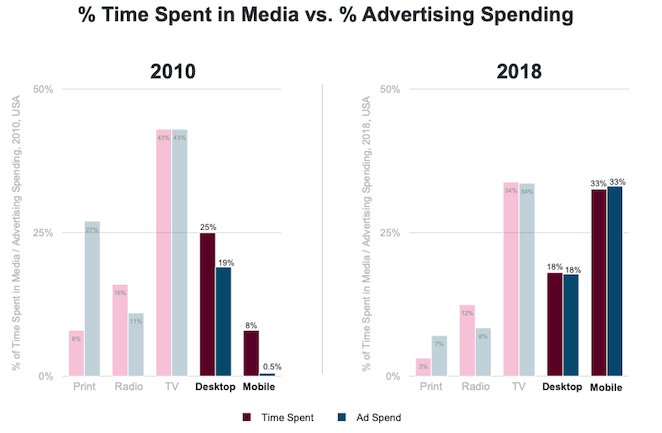
A Historical Perspective: 2010 to 2018 Time Spent
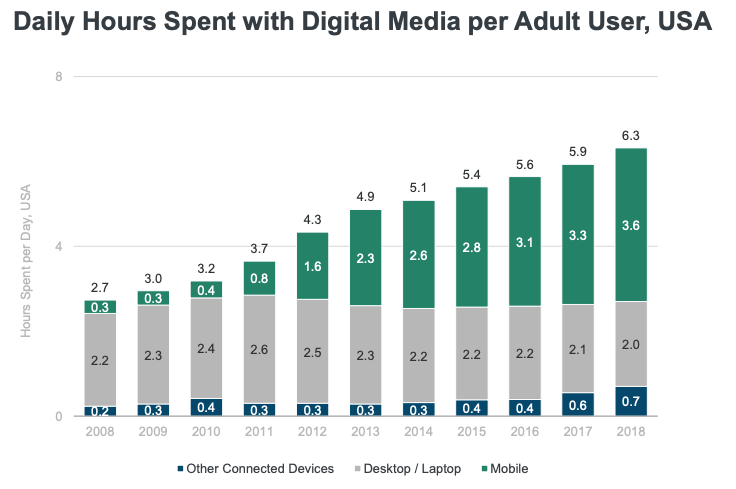
Future Trend
Definition-1
Mobile marketing refers to the two- or multi-way communication and promotion of an offer between a firm and its customers using a mobile medium, device, or technology. Because it involves two-way or multi-way communication, mobile marketing is primarily interactive in nature, and could include mobile advertising, promotion, customer support, and other relationship-building activities.
Definition-2
Mobile marketing is a multichannel, digital marketing strategy aimed at reaching a target audience on their smartphones, tablets, and/or other mobile devices, via websites, email, SMS and MMS, social media, and apps.
Definition-3
Mobile marketing is the practice of “Connecting, engaging and influencing individuals through and with mobile devices.” It’s the untethered, contextually relevant, real-time, mobile enhanced experiences that individuals, existing and prospective customers and partners can have with a brand across all traditional and digital media, devices and networks.

M-commerce: Mobile commerce is the buying and selling of goods and services through wireless handheld devices such as smartphones and tablets.
Livestream shopping: A form of e-commerce where products are sold via live video streams on mobile devices.
Integration of AR/VR: Augmented Reality (AR) and Virtual Reality (VR) technologies are being integrated into mobile marketing strategies to create immersive experiences for users.
Voice Search Optimization: With the rise of voice-activated assistants, optimizing mobile content for voice search is becoming increasingly important.
Multi-modal Search: The use of multiple input methods (voice, text, image) for searching on mobile devices.
Check your phone right now and see how much screen time did you have yesterday on it? Which apps did you use most?
How did mobile help you in your last purchase:
What was your most important today’s mobile moment?
The phone is an extension of the user (alter-ego). Do you agree? What does this mean for how companies should market to you?
As a future marketer, which mobile marketing trend (m-commerce, livestream shopping, AR/VR, voice search) excites you most? Why?

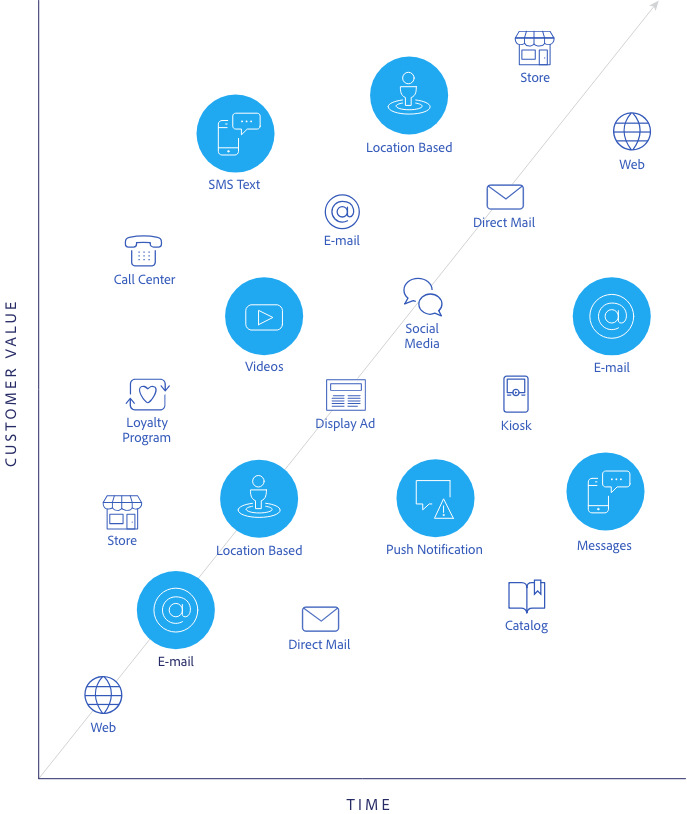
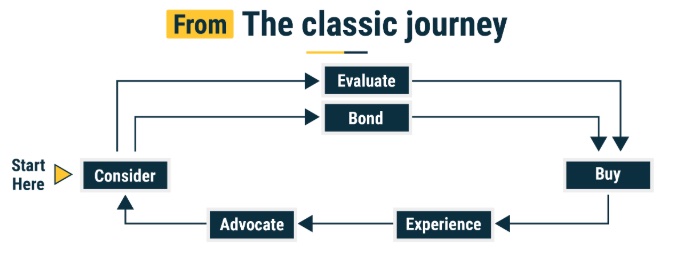
With the introduction of mobile and social media, the funnel has changed to a journey with a loop back to the initial point or trigger, creating an interactive customer journey.
An intent-rich moment during the various stages of CPJ when a person turns to a device to act on a need - to
know, or togo, or todo, or tobuy.
Micro-moments are consumer impluses
Mobile has redefined the customer decision journey. When people shop, their mobile phone is now their go-to advisor and assistant.
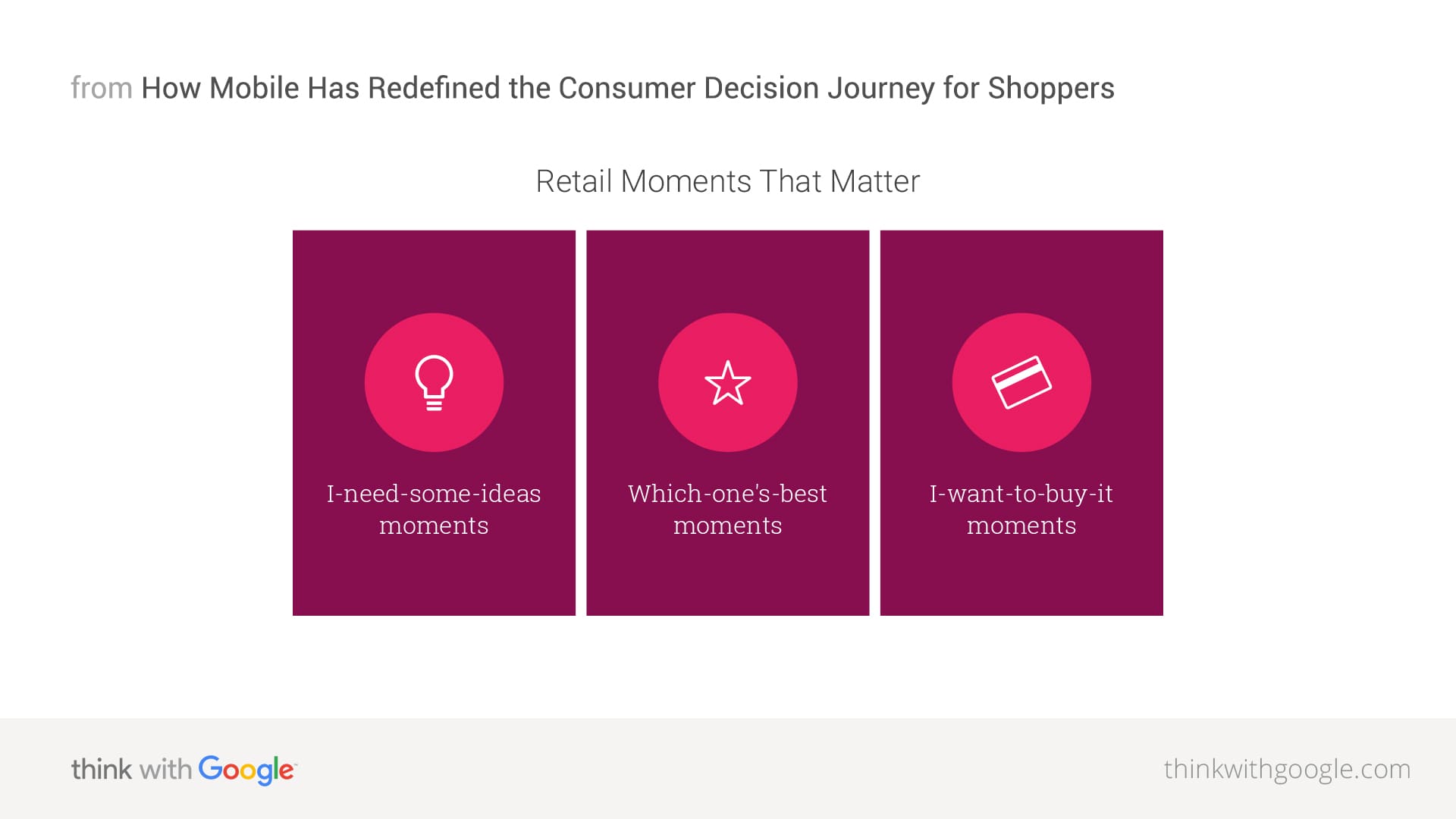
awareness of the product category they’re interested in, but they haven’t yet narrowed down their choices to an exact product.consideration moments—happen when people turn to their phones to compare prices, brands and specs, and read product reviews from trusted sources.decision time. People make a choice about which brand or retailer to buy from, and whether to buy online or in-store.Business can transform our smartphones to act as our personal concierges - our butlers - and not as stalkers.
Holy Grail of Marketing: Reaching target audience at the moments they are open to be influenced and motivated towards preferred action.
The approach to solve this marketing holy grail was marketing funnel:
The path to purhcase is influenced by user experience consisting of several micro-moments making it non-linear.
Micro-Moements: From
SessionstoSpurts
Micro-moments are critical
touch pointswithin today’s consumer journey.
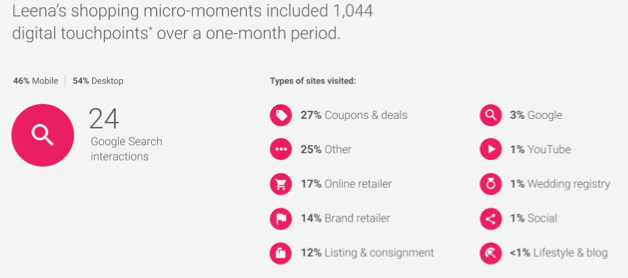
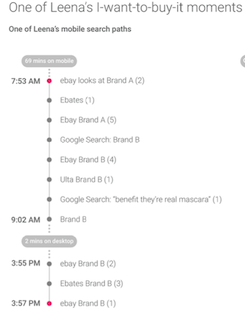
Leena’s a super shopper who regularly looks for deals and coupons online. Over a month period, Leena has over 1,000 retail interactions across a variety of sites and constantly switches between mobile and desktop as she shops.
Micro Moments
Buy-it Moment
Messaging: SMS, MMS, Chat, USSD, Email, SM, Push Notification
Audio: Calls, Streaming
Browsing: Web
Applications: Apps
Phygital Triggers : QR code, NFC, Beacons
Micro Moment: Identify your three micro-moments from the last 24 hours: (1) “I-need-some-ideas” - when you grabbed your phone for inspiration (what triggered it?), (2) “Which-one’s-best” - when you compared options or read reviews (how many sources? did you switch devices?), and (3) “I-want-to-buy-it” - when you made a purchase decision (did you buy immediately? what made you decide?).
Be There, Be Useful, Be Quick: Think of a brand that does this well in YOUR micro-moments. What do they do right?Dynamic Customer Journey: Map one recent purchase journey: Draw or describe how many times you “looped back” to research, how many touchpoints you used (mobile web, app, desktop, in-store, social media), whether your path was linear or messy, and whether it matched the traditional funnel or the new interactive loop model.
If you were marketing a product, which micro-moment would be hardest to capture? Why?

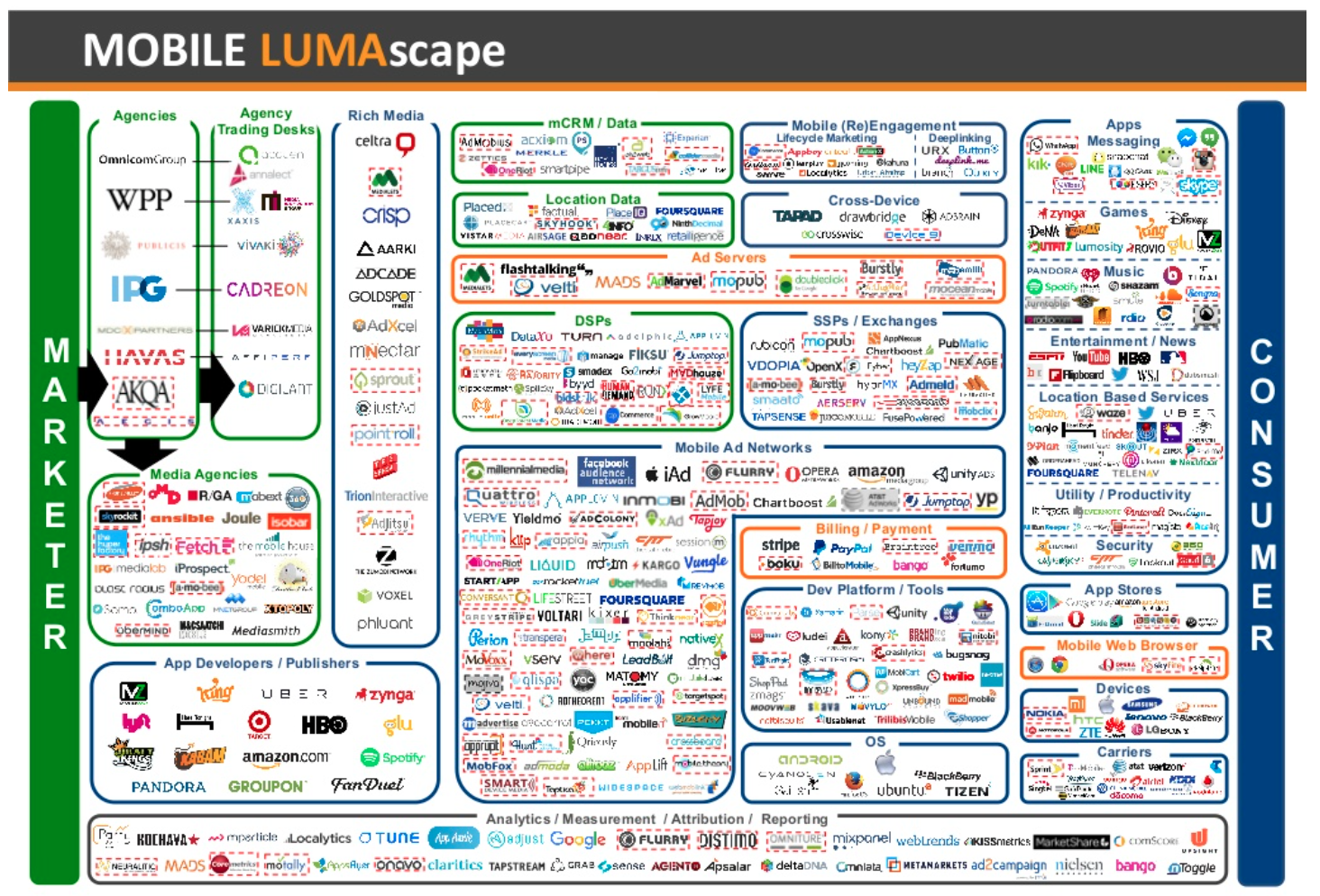
Tech Mix - Tools, Analytics and Attribution
Important
Which factor in your opinion is the most important for mobile marketing strategy?
Mobile Advertising Strategy
Location-based service
Data collection and analysis
Cloud computing
Mobile commerce
Contactless triggers (Digital Payments)
Sensors (AR/VR)
Geo-fencing uses GPS to define geographic boundaries indoors or outside
Geo-targeting is using location information from IP address, ZIP/PIN code to customize the information.Geo-fencing triggers a signal when a potential consumers physically enters a defined geographical area.Geo-conquesting triggers a signal when a potential consumers visits a rival store. Taking advantage of weather in serving the mobile ads.Beacons use Bluetooth Low Energy signals to estimate the location of a mobile user, primarily within a store
Wi-Fi can map the exact location of a consumer in a store aisle by aisle, as long as Wi-Fi is enabled on the phone.
Near Field Communication (NFC) devices are often used for retail transaction systems. They work best for secure one-to-one transactions between a consumer and retailer at checkout
In 2018, Burger King (BK) wanted to drive downloads for its newly redesigned mobile app. Instead of just promoting its own stores, it used geo-conquesting to turn its biggest competitor, McDonald’s, into its single largest advertising platform.
Further Reading: Campaign of the Year: Burger King’s ‘Whopper Detour’
Mobile makes up 88% of all “near me” (I-want-to-go moments) searches, with those mobile searches growing at 146% year over year.
Cases: - Automobiles: for sale, price, dealership - Jewelry: promise rings, wedding rings, engagement rings - Hotels: near me, cheap, price
Strategy: - Identify your mobile-centric searches and themes. - Be there, acoss the moments that matter. - Find new ways to be useful.
Important
Unsuccessful searches on mobile is more frustrating than on desktop.
Mobile-First Indexing: The technical standard. Google ranks your site based on its mobile version.
Micro-Moments: The user behavior framework (I-want-to-know, go, do, buy) that are important on mobile due to impatient nature of consumers on mobile devices.
“Near Me” Search Growth: The data-backed trend showing the power of local intent.
Core Web Vitals (CWV): The set of performance metrics used as a ranking signal for mobile user experience.
There is a quintessential question of “Mobile App vs. Mobile Website?” Both mobile app and mobile website are accessed by the users via their phones.
Note: Use Google’s Lighthouse to audit the mobile friendliness of your website and PageSpeed to check website performance. Google Analytics can be used to measure behavioral performance of website and app.
Mobile app provides companies with new branding opportunities.
Mobile app can provide ability to peronalize where marketing offerings are tailored based on users’ location, interest, behavior, usage, and many more.
Mobile app can leverage native device’s capabilities.
Mobile app can work offline.
Mobile app is more effective in enhancing customer loyalty and retention.
Mobile app can be integrated with other marketing channels.
Place, IKEA’s new augmented reality app. You can easily place true-to-scale 3D models of IKEA furniture right in your own space.
App should be used as a utility to solve a problem or enhance experience, not just for the sake of having an app.
Native Apps: Built specifically for a mobile operating system (iOS, Android).
Hybrid Apps: Built using web technologies (HTML, CSS, JavaScript) and wrapped in a native container.
Mobile Web Apps: Accessed through a mobile browser, not installed on the device.
Progressive Web Apps (PWAs): Web applications that offer a native app-like experience through modern web capabilities.
Mobile app retention is very low. Therefore, think strategically before building an app. The app marketplace is very crowded.
Mobile messaging is mobile marketing strategy to connect, communicate, and conduct commerce with connected individuals through and with mobile messaging.
Types of Mobile Messaging
Mobile messaging is widely used in two-factor authentication (2FA) for security purpose.
Platforms: SimpleTexting, EZTexting, Twilio
This is a use case of mobile messaging strategy. WhatsApp in India is expanding beyond personal chat into a core platform for India’s digital economy. This strategy leverages the platform’s high user engagement, with 91% of online adults reportedly contacting businesses via WhatsApp, to enable MSMEs to manage orders, collect payments, and communicate with customers. The future of this strategy focuses on integrating AI to create more powerful, conversational chatbots, further driving a monetization model that sees India as a major contributor to WhatsApp’s paid messaging revenue
A push/pull strategy refers to the way information and products move between consumers and a manufacturer.
Pull: Consumers pulling or requesting the content from the firms. Example: Messaging, USSD
Push: Firms pushing content to consumers. Example: Push Notification
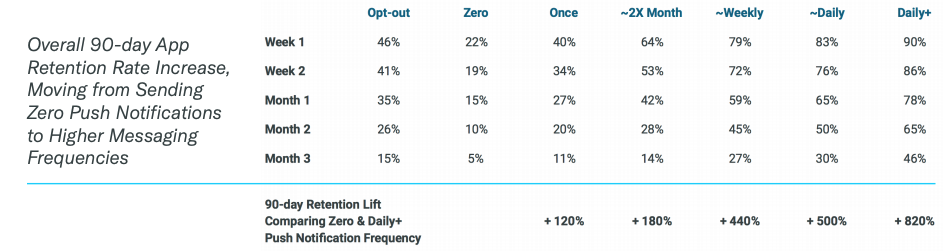
For Push Mobile Strategy be wary of Consumer Privacy. Just Say No to Push Notifications.
Source: Urban Airship (2017)
Weekly notifications should be a reasonable goal for any app in terms of push notification send frequency. In fact, by monitoring user lifecycle signals (new install, app opens, completed registration, completed in-app purchase, app upgrades, etc.) most apps could achieve automated, triggered weekly push notifications virtually overnight.
QR code is a type of matrix barcode (or two-dimensional barcode) that is readable by QR scanners, mobile phones with a camera.
QR codes store information such as URLs, text, or other data that can be quickly accessed by scanning the code with a mobile device.
QR codes are widely used in mobile marketing campaigns to provide quick access to websites, promotions, product information, and more.
QR code is a driving factor towards phygital (physical + digital) experience, acting as a link between the offline world and the online world.
Additional Resource: QR Code Generator has blogs and resources on QR code marketing strategies. For example, the article Maximizing Customer Engagement: QR Codes for Restaurants discusses how restaurants can use QR codes to enhance customer engagement by streamlining operations like ordering and payment, while also boosting engagement through personalized interactions, loyalty programs, and direct feedback channels.
Think of one brand or business you interact with regularly (could be a retailer, restaurant, bank, entertainment service, etc.).
What mobile strategies are they using? Check all that apply and give specific examples:
Which driver matters most for this brand? (Context, Location, Time, Saliency, Crowdedness, Weather, Trajectory, or Social Dynamics) - Pick ONE and explain why.
Rate their effectiveness: On a scale of 1-10, how well does their mobile strategy work for YOU? What’s working? What’s missing or annoying?
Where you are
Location-based advertising uses GPS to define geographic boundaries indoors or outside.
Geo-targeting is using location information from IP address, ZIP/PIN code to customize the information.
Geo-fencing triggers a signal when a potential consumers physically enters a defined geographical area.
Geo-conquesting triggers a signal when a potential consumers visits a rival store.
The location data is captured only with an explicit consent from the consumers.
Where You've Been
These four dimensions that together help marketers figure out where (location), when (time), and who (history) of the potential target.
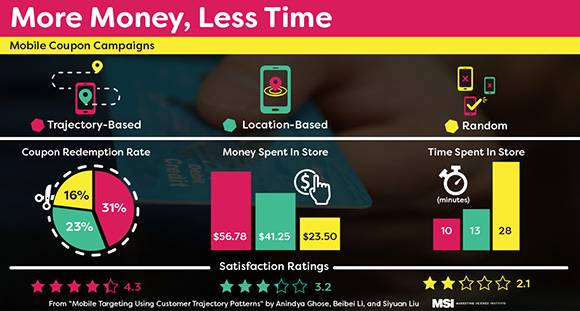
Source: Ghose, Li, and Liu (2017)
Online advertising is displaying advertising messages on the Internet over mutliple devices using mutliple formats.
Broadly Online Ads can be dividing into two forms:

Display ads are the places on websites where advertisers place their messages/ads.

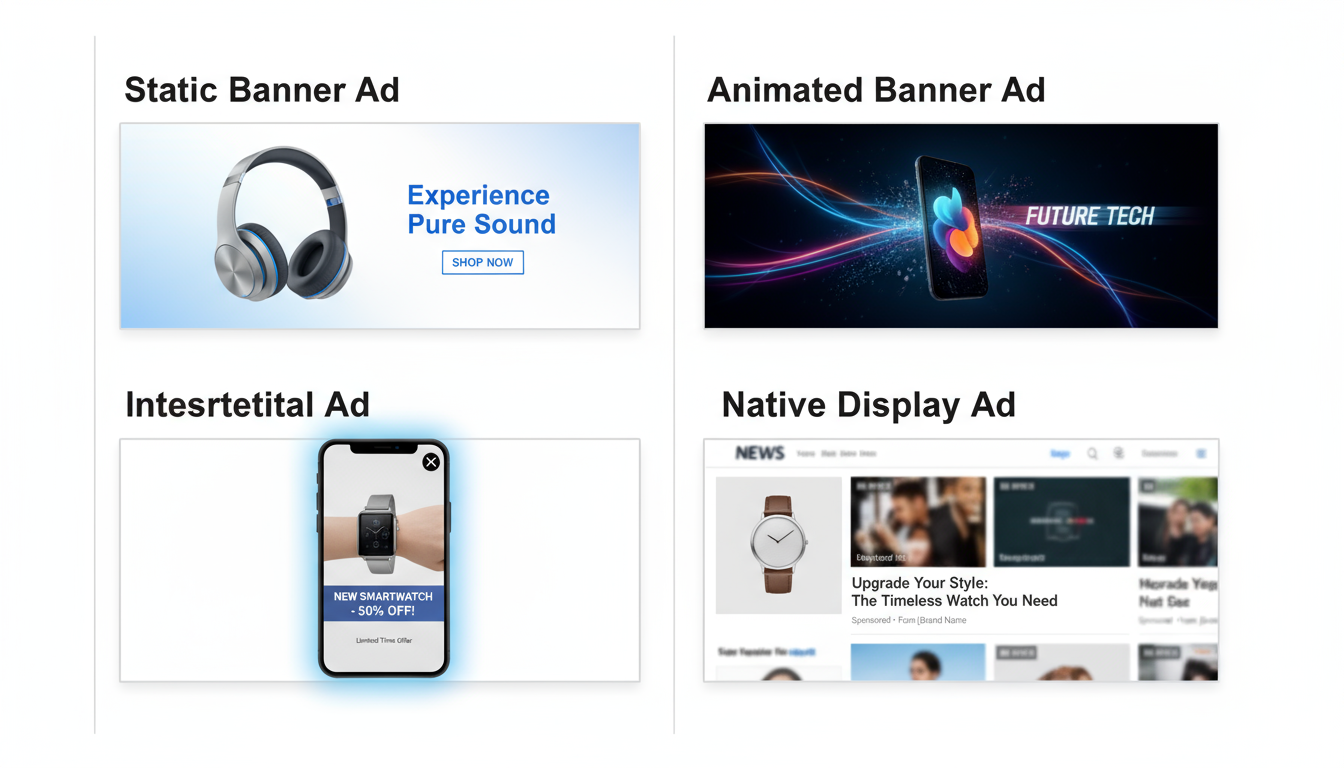
Banner Ads: Banner ads are form of online display advertising through banners.
Types of Banner Ads
Pop-up ads were forms of display ads that are now less popular.
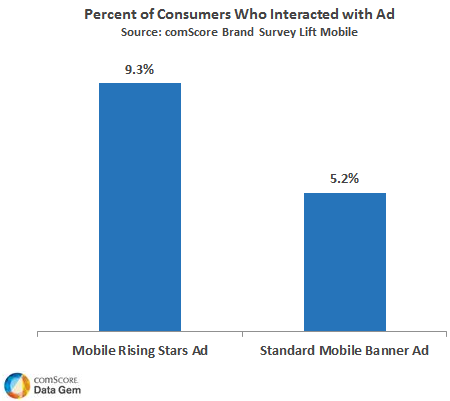
Source: Mobile Rising Stars from IAB

Source: comScore (2013)
Brand Visibility
Brand Awareness
Lead Generation
Re-targeting the audience
Remarketing1 through pixel-based marketing
Web traffic generation
TOFU (Top of the Funnel) Engagement
Warning
An average user living in the US sees around 93 display ads per day.
Source: The Drum, 2023
Ad Blindness: Consumers have developed a tendency to ignore banner-like information.
Ad Fatigue: Consumers get tired of seeing the same ad repeatedly.
Ad Blockers: Consumers use ad-blocking software to prevent ads from being displayed.
App Tracking Transparency (ATT): iOS feature that requires apps to get user permission before tracking their data across other apps and websites.
Privacy Sandboxing: Restrictions on how user data can be collected and used for targeted advertising.
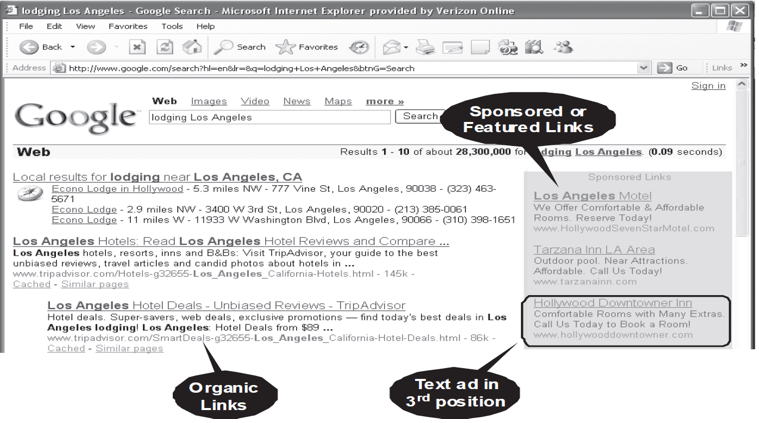
Search ads appear as a result of web search when users search for products and services that business provides.
Search ads are browser based Internet Search Engines (SE) such as Google, Bing.
It is less intrusive to the consumers
Two dimensions to consider
Unlike Display ads, search ads are delivered by
pullmechanisms instead ofpush.
Search engine marketing (SEM) allows firms to target consumers by placing ads on search engine.

Keywords are words or phrases that users type into search engines when looking for information.
Keyword selection is the process of identifying and choosing the most relevant and effective keywords to target in search engine marketing campaigns.
Factors to consider in keyword selection: Relevance, Search Volume, Competition, Cost-per-click (CPC), Long-tail keywords1
On Google Analytics, you can track popular keywords used on your website by drilling into Engagements -> Events and selecting view_search_results.
Use Google Keyword Planner to find keywords for your search ads campaign.
Use AI tools (e.g., ChatGPT, Gemini, Claude) to research on keyword ideas.
Narrow down keywords based on your business goals and target audience.

Efforts to influence search engine results page (SERP) are known as SEO.
Fine tuning website to reflect specific keywords and phrases relevant for the business of the site
Raise the position of the site’s link in the organic listing from a search
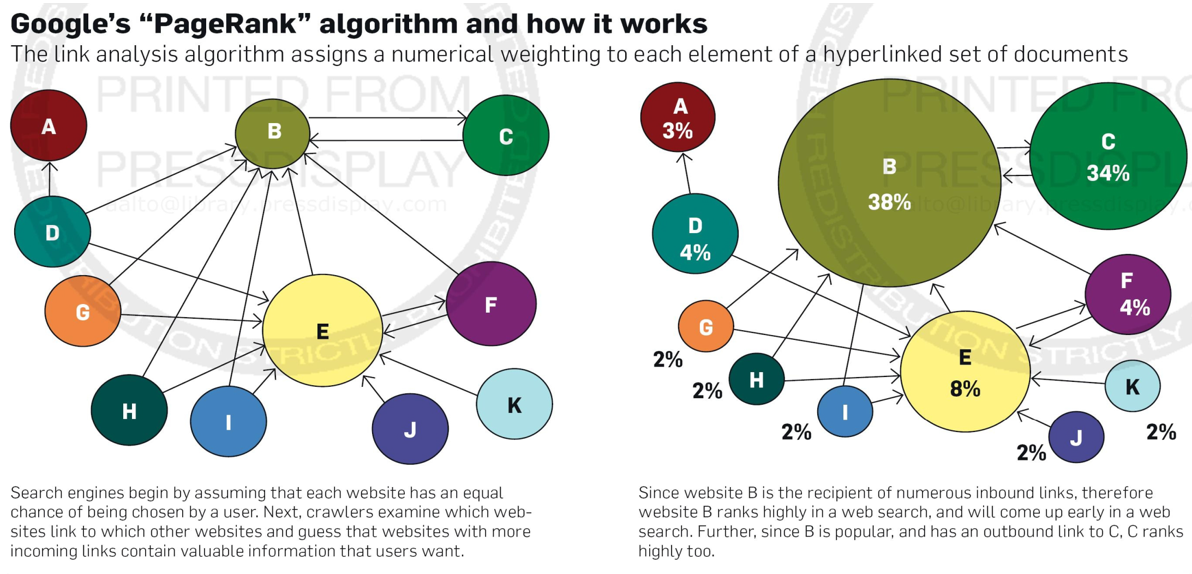
Relevance: Make your site interesting and useful
Popularity: Get other reputable sites to link to your site
Use Behavior: How users behave when searching: how they interact with search results and websites
Reference: Search Engine Optimization (SEO) Starter Guide from Google
For SEO to work, your website must be indexed. In Google search engine, you can search with “site:” appended to the front of the website to see if that website is indexed. For example, “site:rmit.edu.au” will show all the indexed pages from rmit.edu.au.
Note: When you search on Google, you now know that higher-ranking page must be more relevant, popular, and engaging than lower-ranking pages for your query.
Source: StatCounter Global Stats - Search Engine Market Share
Most users go to search bar
Users who search are more likely to convert
Internal search data can provide insights into customer intent and behavior
Auto-complete and query recommender1 and suggestions can enhance user experience

About 15% of total referral traffic for Walmart in September was from ChatGPT, up from 9.5% in August, data from SimilarWeb showed.
Conversational Search - Shopping moves from search bars to AI chatbots with natural language interactions
Direct In-Chat Transactions - Instant checkout within AI platforms eliminates traditional website visits
AI-Powered Discovery - Product recommendations and review summaries replace manual browsing and comparison
Platform Shift - Major retailers partnering with AI platforms signals search moving beyond Google
Competitive Imperative - AI adoption becomes essential to compete
New Traffic Sources - AI chatbots emerging as significant referral channels
Zero-Click Search Dominance: AI chatbots providing direct answers, reducing traditional search clicks.
Multi-Modal Search Evolution - Visual search (Google Lens), voice queries, and video search require new content strategies beyond text-based SEO.
Personalization at Scale - Hyper-customized results based on user history, context, and preferences; generic SEO tactics become obsolete.
Mobile video/audio ad is growing. Consumers increasingly paying for data may limit the growth of these ads.
Mobile video ads are short video advertisements that are specifically designed to be viewed on mobile devices such as smartphones and tablets.
Mobile audio ads are audio ads that are delivered through mobile devices, often within music streaming apps and podcasts.
Enable Digital Out of Home (DOOH) ads to interact with mobile phones. Such advertising strategies may use SMS, QR Code, or tagging.
Some examples:
Case Study: McDonald’s Uses DOOH & Mobile to Drive 42,000+ Store Visits
Case Studies: OOH + Mobile Integration Drive Lift, Recall, and ROI
Mobile Gamification to Track and Influence User Behavior: A Case of Pokémon.
When we play games, our neurons release dopamine in anticipation of winning. The elements of chance, surprise, and competition are especially strong triggers. In other words, games motivate.
Count and categorize the ads you remember seeing: 👓
Which ONE ad do you actually remember? ♥️
Why did it stick in your memory? 💖
Did you click on ANY ad today? 💵
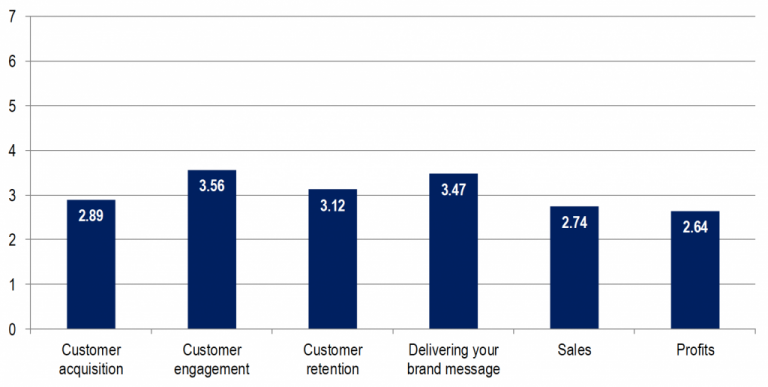
Things like upsell, corss-sell, contextual promotions, etc. do not add to a revenue number for the mobile division, but they are significant for increasing wallet size of the customer. Let me call this phenomenon as “Mobilerooming”, where the customer is in the showroom, using mobile devices to make her shopping experience better, contributing towards revenue increase.
Metrics for mobile marketing should measure how customer purchase journey is enhanced by the use of mobile. For example, mobile can help customers in:
Superior customer experience during the purchase journey will indirectly impact the firm’s bottom line.
Number of impressions
Location
Publisher
Number of engagements and engagement rates
Dwell time with ad
Completion rates
Spending
AWARENESS -> ENGAGEMENT -> TRANSACTION -> LOYALTY
App installs.
Email opt-ins.
SMS opt-ins.
Phone numbers provided.
Likes and reviews generated.
Test drives requested.
Coupons requests and redemption.
Thank You!
🙏
Q&A
Mobile users are more important than desktop users
Mobile phone users are characterized by “snacking” rather than “feasting”.
Rich media (e.g., video or pictures) is equally effective for mobile users as for desktop users.
Location matters more for mobile users.
Augmented reality (AR) superimposes computer-generated experiences onto a user’s mobile screen
A live or indirect view of a real-world environment whose elements are enhanced by sound, video, graphics or GPS data
AR is being used in many industries and in many ways
Mobile Payment System
Wearable Technologies