Social Media Marketing: Foundation

Advanced Digital Marketing

Ashish Kumar

School of Economics, Finance & Marketing, RMIT University

Agenda

  • Social Media: What it is?
  • Social Media Platforms
  • Social Media Marketing
  • Conceptualizing Social Networks
  • Identifying Influencials

Social Media: What It Is?

Components of Social Media

Definitions of Social Media

Definition-1: Communication and Interaction

Social media is form of digital media that enables communication and interaction among people and between people and organizations, including brands, companies, and other entities (e.g., governments).


Definition-2: User Generated Content

Social media is a group of Internet-based applications that build on the ideological and technological foundation ofWeb 2.0, and that allow the creation and exchange of User Generated Content.


Definition-3: Online Community

Forms of electronic communication through which users create online communities to share information, ideas, personal messages, and other content (as videos).

Features of Social Media

  • Social Interactivity
    • Social interactivity means that on social media, people are able to communicate or interact with others.
    • For example, on Twitter you can send messages or follow anyone (or anything) that has a public account.
  • Openness and Flexibility
    • Social media is open to almost everyone i.e. anyone, can participate in social media, and the forms of interactions or communication between people is flexible in nature.
    • With minimum eligibility criterion anyone can participate and interact via social media channels mutually
    • Flexible communication over social media means social interaction can take place in many for-mats such as sharing photo, posting a video, sharing location, posting opinions, or writing reviews.

Features of Social Media (2)

  • Fast-paced flow of Information
    • Social media facilitates rapid spread of information faster than any other forms of media.
    • We use the term ‘Viral’ in this sense. However, note that information flow can take place mainly in two forms on social media: one-to-one (narrowcasting) and one-to-many (broadcasting).
  • Constant Innovation and Evolution
    • Social media platforms are constantly evolving, and these upcoming innovations are giving new shapes to these social interactions

Social Media & Technology

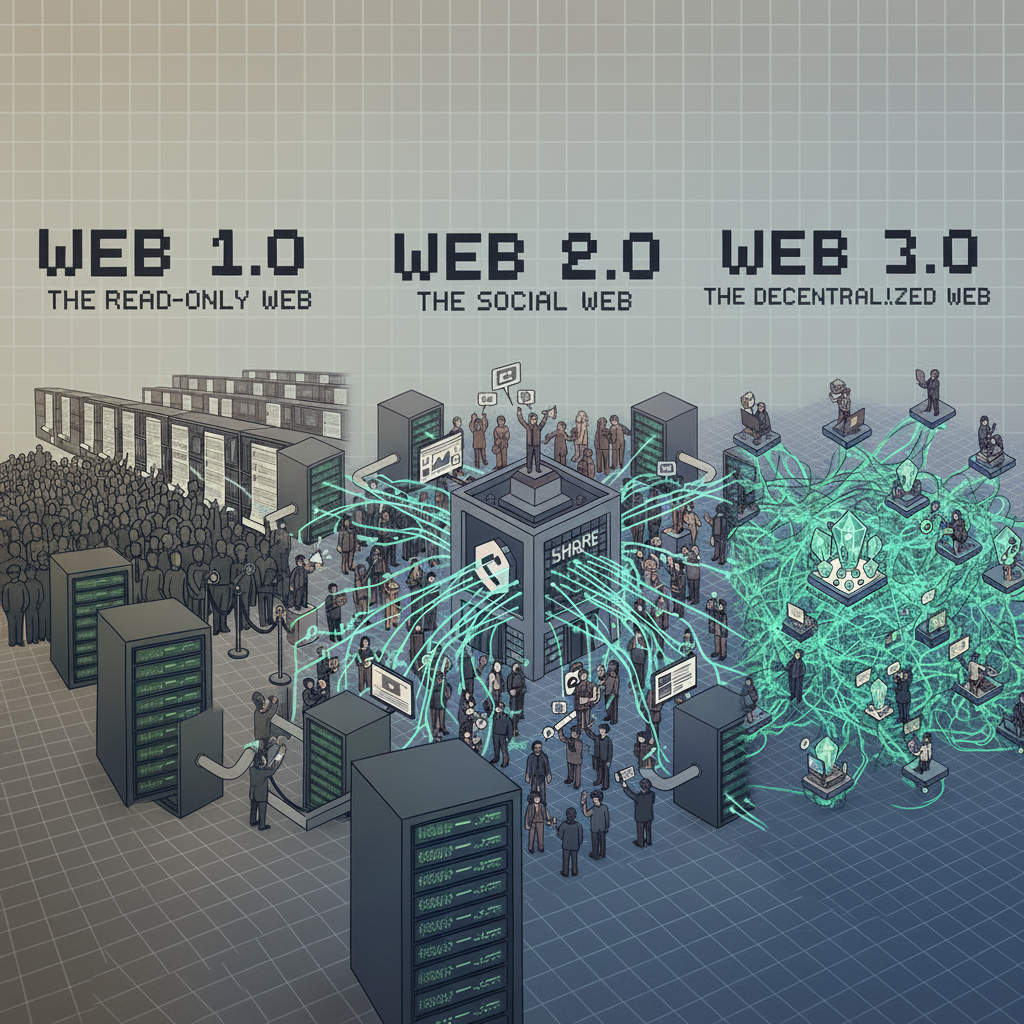
  • Web 2.0
    • Technologies enabling Online Contents
      • Adobe Flash (obsolete)
      • RSS (Really Simple Syndication)
      • AJAZ (Asynchronous Java Script)
  • User Generated Contents
    • Various forms of media content that are publicly available and created by end-users
    • Collaborative contents generation with creative efforts
    • Publicly accessible
  • Web 3.0

Reflection

Social Media Platforms

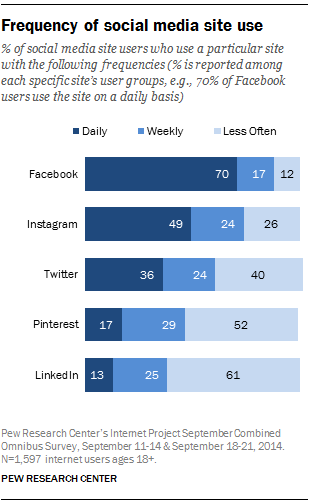
Social Media Platforms

Most popular social networks worldwide as of February 2025, by number of monthly active users

Classification using Social Theory

Classification using Interaction


Reflect

  • Pick a social media platform where you are most active.

  • Reflect on how the platform performs in terms of self-presentation/self-disclosure and social-presence/media-richness

Social Media Marketing

Definition

Social Media Marketing

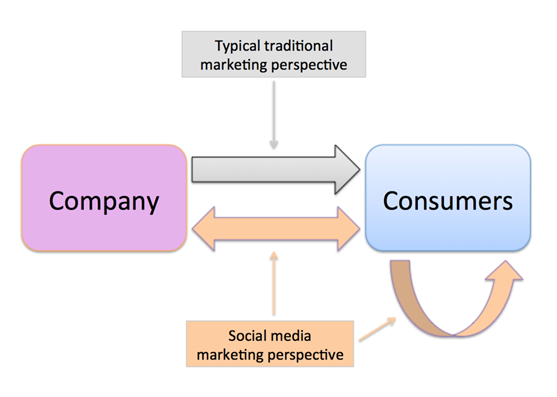
Social media marketing is a process that involves identifying opportunities for leveraging social interactivity among consumers in open and flexible social media environment with fast-paced flow of information.

BEING ACTIVE CONSUMER OF SOCIAL MEDIA SERVICES (FACEBOOK, TWITTER ETC.) DOESN’T MAKE YOU A SOCIAL MEDIA EXPERT!

Social Media vs. Traditional Media

Advantage of Social Media

Rule of Social Media Marketing

IFCS

  • Interaction First

  • Communication Second

What Goes Around Comes Around



Social Theories

The Pub Principle

The Pub Principle is a historical analogy asserting that social media do not create a new form of societal communication; rather, they are a return to the way communication occurred before radio and television made it possible to communicate with millions of people at once.

Social Intrusion Theory

Attempts to push content out to audiences in social media will receive negative reactions, while allowing audiences to pull content they want will be much more favorably received

Reflect

  • In your opinion, which single theory among all discussed in the slides is an important consideration for social media marketing?

  • Reflect on why that is the case.

Conceptualizing Social Networks

Network

Networks are mathematically conceptualized using Graph Theory.

Elements (node and edge) of social network have some meaning.

Social Network

A social network is collection of nodes and edges where these elements have a social structure.

  • Nodes in a social network are called actors (e.g., people, organizations).
  • Edges in a social network are called ties (e.g., friendship, supplier)

Social Network (2)

  • ACTORS
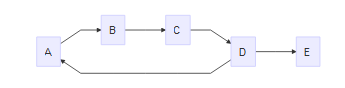
    • Here \(A,B,C,D,E\) are nodes or actors or vertices.
    • Thus, \(V=\{A,B,C,D,E\}\)
  • Multiplicity
    • Different types of ties
  • TIES
    • Edges or Ties are represented by \(\rightarrow\)
    • Thus, \(E=\{(A, B), (B,C), (C, D),\\ (D, A), (D, E)\}\)
  • Tie Strength
    • The intensity of ties

Graph

A graph is represented as \(G(V,E)\) where \(V\) represents vertices (or actors) and \(E\) represents edges (or ties).

In the example \(V=\{A,B,C,D,E\}\) and \(E=\{(A, B), (B,C), (C, D), (D, A), (D, E)\}\)

The graph shown is directed graph where let’s assume relationship (or tie) is “follow”. Thus, \((A,B)\) means \(A\) follows \(B\)

This graph \(G(V,E)\) can also be represented as:

Terms

Let \(G = (V,E) = \{(v_{1}, v_{2},...,v_{n}),(e_{1}, e_{2},...,e_{n})\}\) be a graph.

  • The size of the graph is \(|V|=n\)
  • The number of edges of the graph \(G\) is \(|E|=m\)

Neighbourhood For any node \(v\), in an undirected graph, the set of nodes it is connected to via an edge is call its neighborhood and is represented as \(N(v)\)

In a directed graph we have incoming neighbours \(N_{in}(v)\) and outgoing neighbours \(N_{out}(v)\)

Degree The number of edges connected to one node is the degree of that node (the size of its neighborhood)

Degree of a node \(i\) is usually presented using notation \(d_{i}\)

In directed graph \(d^{in}_{i}\) and \(d^{out}_{i}\) are in-degree and out-degree of node \(i\).

Identifying Influencials

Important Nodes in Social Network

Most important nodes in a social network is identified using centrality measure.

  • Degree Centrality
    • In-degree centrality: Prominent/Popular (actors seek to direct ties to them)
    • Out-degree centrality: Influencer (exchange/disperse information quickly)
  • Closeness Centrality
    • How close a node is to other nodes (reaching the whole network)
  • Betweenness Centrality
    • The number of shortest path that pass one node (diffusion of information)
  • Eigenvector Centrality
    • One’s importance is known by important ties

Reflect

  • Solve some of the problems provided on the Canvas related to these concepts.


Thank You!

🙏

Q&A