Digital Marketing Technologies
(Advanced Digital Marketing)
Agenda
Digital Technology
Social Technology
MarTech and RetailTech
Artificial Intelligence
Framework of Social Technology Implementation
Technology and Customer
Digital Technology
What is Technology
Technologies are means of production.
Technologies help firms achieving economies of scale and scope.
The broad category of technology impacting digital marketing fall under
Digital Technology

Digital Technology
Definition
Digital technologies are both hardware and software technologies that are used to create, store, process, and exchange information or goods in digital form.
They are also called Internet Technologies.
In a digital marketing environment, firms use digital technologies to create, communicate, deliver, and sustain value for all stakeholders.
Examples of Digital Technology
- Web
- Social Media
- CRM
- Personalized Marketing
- Marketing Analytics
- Mobile
- Cloud
- Internet of Things (IoT)
- Artificial Intelligence (AI)
- Robotics
- Voice
- Digital Advertising
Internet technologies have fundamentally changed the marketing strategies executed using 4Ps - product, price, place, and promotion - in response to the shift in human behavior and interactions caused by these technologies.
Interaction between Buyer & Seller
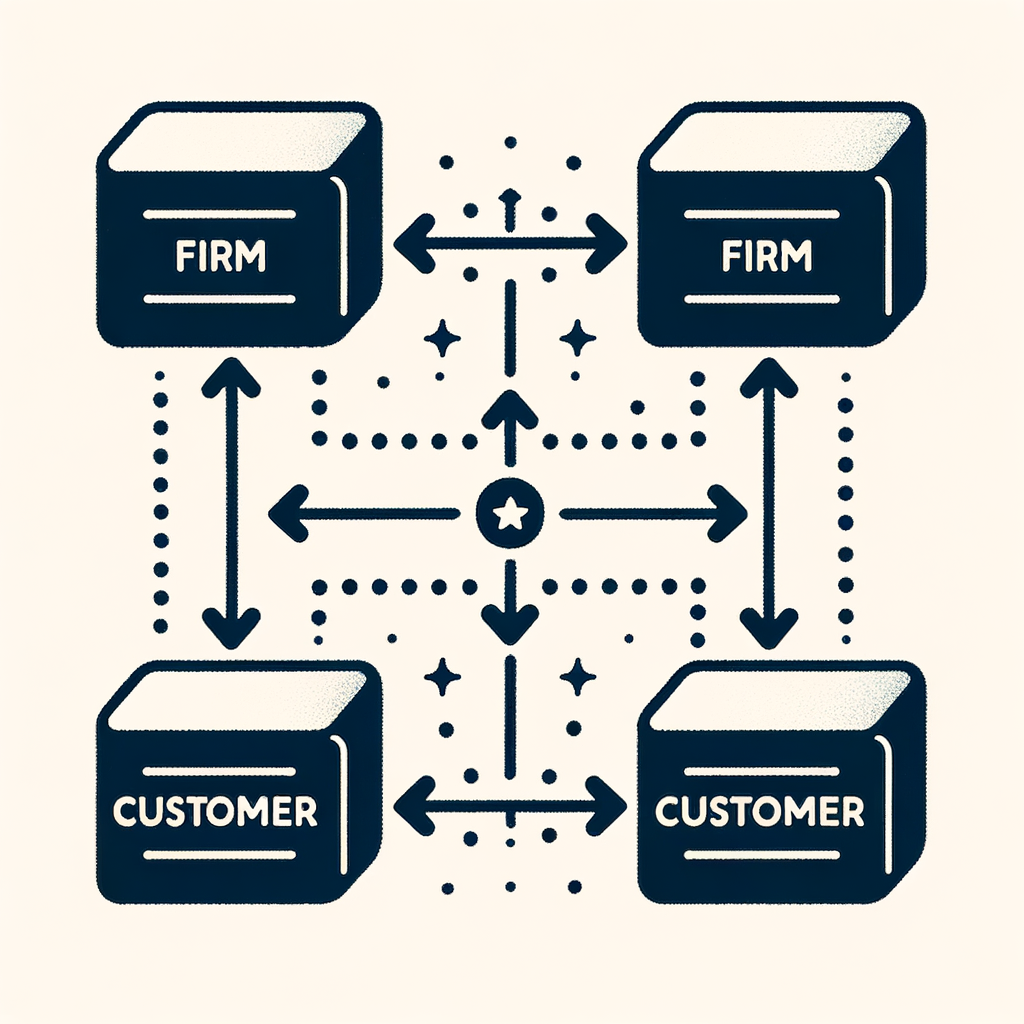
Technology for Technology’s Sake?
Technology must be purposeful, not performative. It should solve problems, enhance experiences, or enable new capabilities - not exist for its own sake.
- Adopting technology simply because it’s new or trendy—without strategic alignment—leads to:
- Wasted resources
- Fragmented efforts (e.g., Data silos)
- Disrupted workflows and missed opportunities
- User frustration or poor user adoption
What happens when technology is designed with a clear social purpose?
Definition
Social Technology
Social technologies leverage the Internet and mobile services to facilitate multifaceted interactions between individuals and firms, impacting various business areas such as online retailing, healthcare, and finance.
Social Technologies
Social media (social networks, wisdom of crowd)
Financial technologies (FinTech)
Marketing technologies (MarTech)
Education technologies (EdTech)
Social technology is an operations lever that converts social interaction into forecasting power, demand generation, innovation, and adaptive networks.
Why Social Technology?
Social technologies create new business models and new industries
Social technologies impact
- businesses operation
- industry competition
- supply chain management
- customer relationship management
- marketing
Social technologies shape consumer behavior.
- They lead to emergence of new behavior.
Social technologies spur business innovations and firm operations strategies.
Some Examples
- Wisdom of crowds:
- Internal/external prediction markets aggregate frontline knowledge for forecasting and risk management (e.g., Google, Ford, HP, Intel).
- Social pricing and promotion:
- Peer-sharing incentives drive demand and network effects (e.g., Meituan coupon sharing).
- Live streaming commerce:
- Retail ops integrate content + conversion in real time (e.g., Walmart x TikTok pilots).
- Social data for decisions:
- Social media signals improve operational planning (inventory, demand forecasting).
- Open innovation:
- Platforms source product ideas and features (e.g., Dell, Google, Xiaomi).
Broad Class of Social Technologies
| Market | Tech Category | Core Social Mechanism | Value Creation |
|---|---|---|---|
| Goods/Services | MarTech, RetailTech, HealthTech | Peer influence, UGC, community commerce | Demand generation, conversion, retention |
| Finance | FinTech, InsurTech | Crowdsourced decisions, P2P transactions, social proof | Risk distribution, investment signals, access to capital |
| Labor | HRTech, TalentTech, EdTech | Professional networks, peer validation, collaborative learning | Talent matching, skill development, workplace transparency |
Reflect
- Which drives more sustained marketing ROI?
- Novel tech features
- Social interaction mechanisms
- Which scenario is
tech-firstvs.social-tech-first- Brand launches an AI chatbot without a clear use case that leads to low adoption.
- Retailer runs live shopping with creators, limited-time social pricing, real-time inventory updates.
- Company runs an internal prediction market (based on data sourced from various platforms) to forecast campaign outcomes and content resonance.
Technology is an enabler; value is created when it mobilizes human networks and feeds back into operations.
MarTech and RetailTech
Marketing Technology (MarTech)
Definition
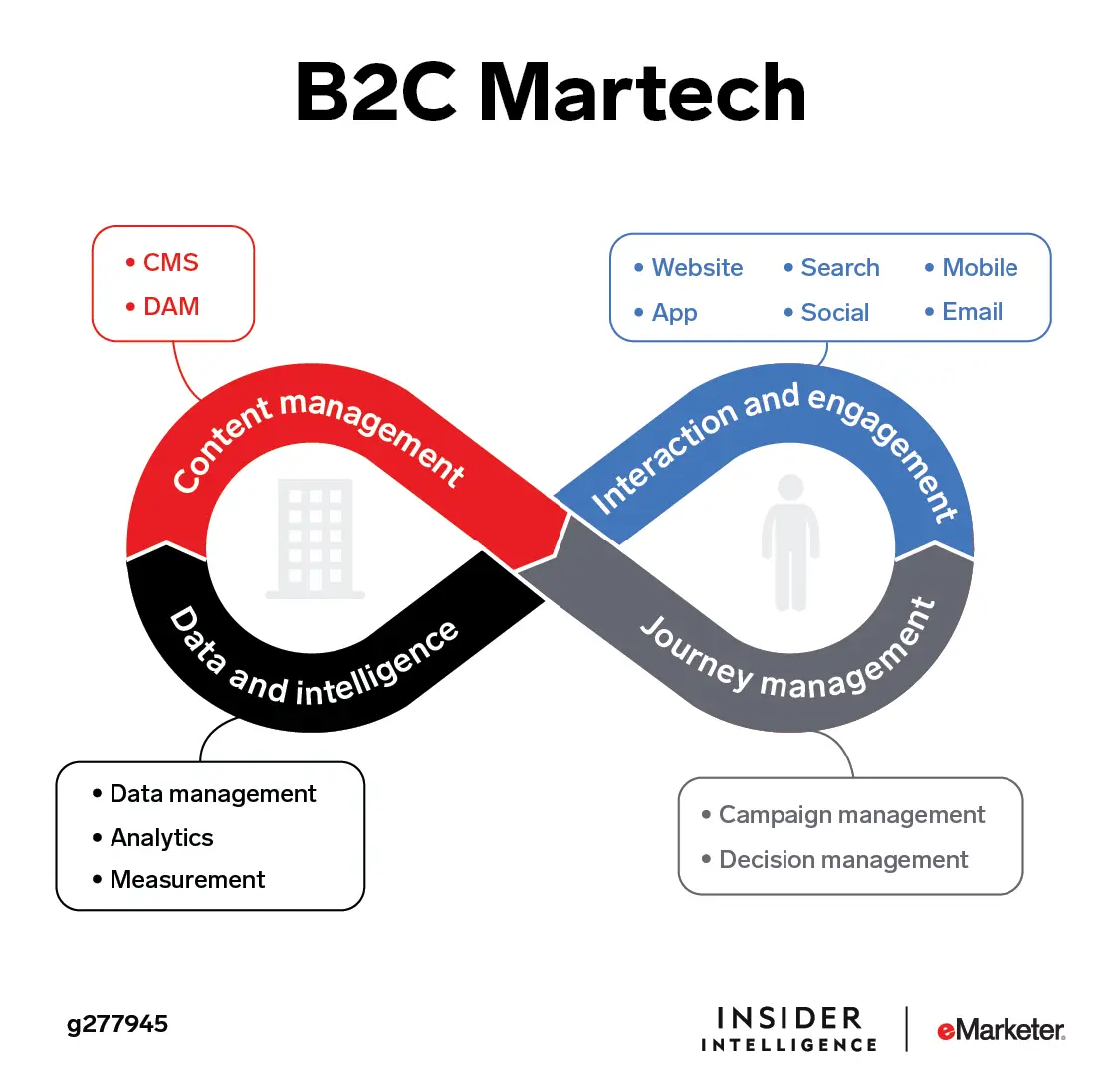
Marketing technology, also known as MarTech, is a set of software solutions used by marketing leaders to support business objectives and drive innovation within their organizations. MarTech is the convergence of marketing and technology which refers to any software or tools that harness technology to achieve marketing goals and objectives
Focus of MarTech:
Content
Customer experience
Advertising
Direct marketing
Marketing management
Marketing data and analytics
Key Technologies in MarTech
- Artificial Intelligence (AI)
- Big data
- Virtual reality
- 5G technology
- Automation
- Geo-fencing
- Neural analytics
- Chatbots
- Quantum computing
- Augmented reality
- Voice and visual search
- Blockchain
- Progressive web apps
- Sensory enabling technology
- Predictive analytics
- Customer data platforms (CDPs)
- Mixed reality
- Social media and messaging apps
- Internet of Things (IoT)
- Self-service technologies
- FinTech
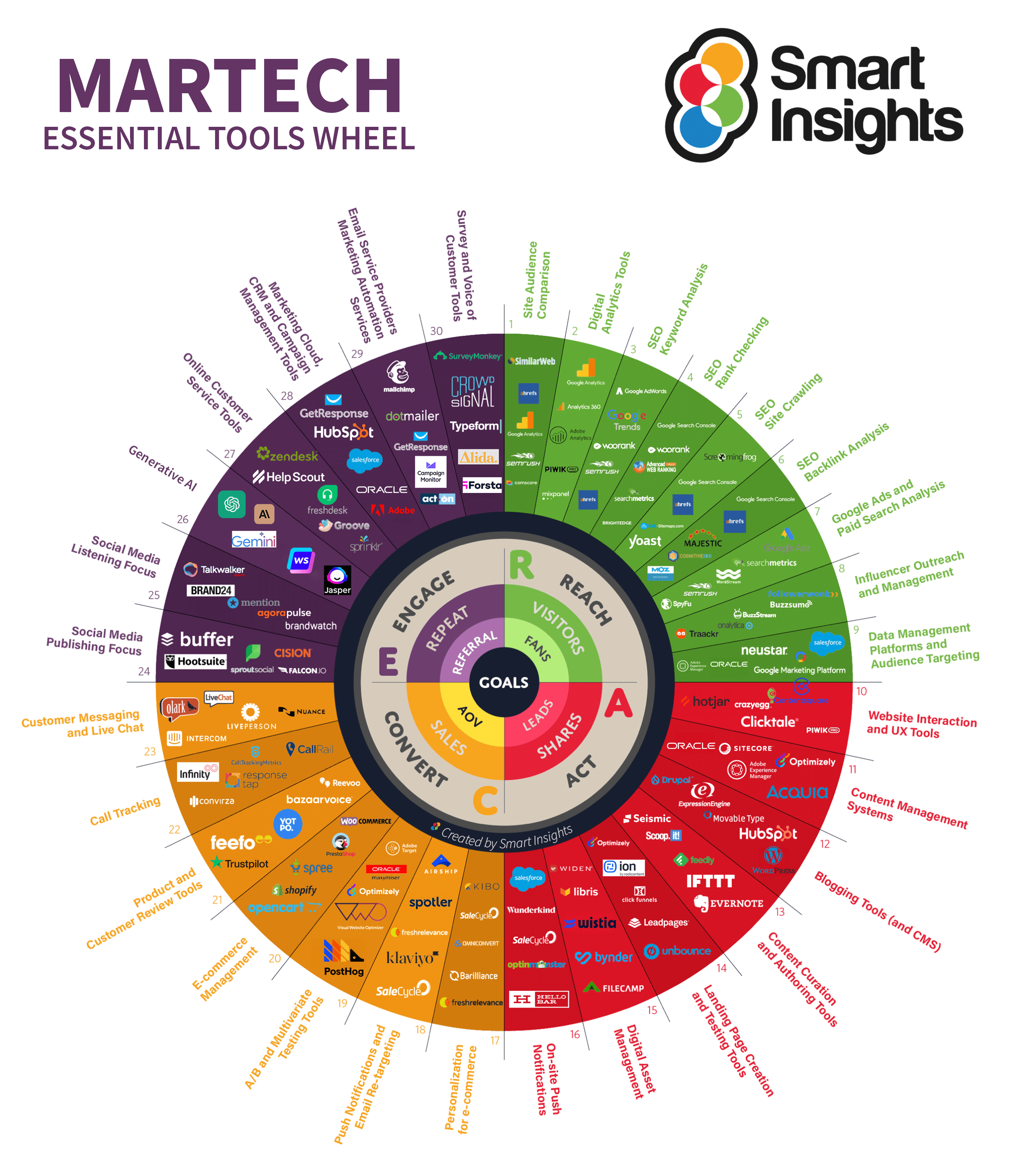
MarTech Tools
Retail Technology (RetailTech)
Definition
Retail technology refers to digital software, platforms, and innovations that help retailers manage and optimize their operations. Typically, retail tech is used to improve CX, increase efficiency, and optimize profitability for retailers.
Examples:
Point of Sale (POS) systems
Payments (digital wallets, contactless payments, BNPL)
Generative AI
Virtual Reality
Augmented Reality
Retail CX
Customer Data Platforms (CDP)
In-store signage
CRM (loyalty program)
Note: MarTech and RetailTech often overlap, as many technologies serve both marketing and retail functions. However, martech is just one facet of the greater retail tech.
Emerging Trends in RetailTech
QR Codes: Helps blend online and offline retail seamlessly.
Metaverse1 Shopping: Virtual stores and showrooms for immersive shopping experiences.
Livestream Shopping: Leverage social media platforms for real-time product demonstrations, customer engagement, and selling.
Quick Commerce: Ultra-fast delivery services (within hours) to meet consumer demand for instant gratification.
Sustainable2 RetailTech: Technologies that promote eco-friendly practices (e.g., circular model, energy-efficient store designs and waste reduction systems).
Social Commerce: Integrating social media platforms with e-commerce to facilitate direct shopping experiences (e.g., group buying, social payment).
Emerging Trends in RetailTech (2)
Retail media network (RMN): Allow brands to advertise directly on retailer platforms, leveraging first-party data for targeted marketing.
Non-fungible token(NFT1): Retailers use NFTs to create brand awareness and offer unique digital collectibles to customers for CRM.
Blockchain: It enables brands and retailers to engage in Metaverse commerce, enhance supply chain transparency, and improve payment security.
Digital Payments: Adoption of cryptocurrencies, digital wallets, and BNPL for seamless and secure transactions.
Self-checkout: Reduces wait times and enhances convenience for customers.
Loyalty Programs: Use of apps and digital platforms to manage customer rewards and engagement.
Examples of RetailTech
Touchless Checkout
Space Management
Future of RetailTech
Brick and mortar is here to stay. It will be more automated, personalized, and experiential.
Retailers will use power of AI to harness consumer insights and do market research.
3-3-3 Rule
- 3 news things to sell: (retail data, retail media, and virtual collectibles)
- 3 ways to sell: (livestreaming, metaverse, quick commerce)
- 3 ways to deliver: (personalized, experiential, sustainable)
Artificial Intelligence
Role of AI in Marketing
Precise audience targeting: Leveraging consumer data analysis, AI iden- tifies target audiences and distributes customized messages through a range of channels like email, social media, or mobile apps.
Creative content generation: Based on consumer data and preferences, AI can skillfully produce bespoke content that resonates deeply with the intended audience.
Effortless A/B testing: Automating the A/B testing procedure with AI per- mits marketers to assess multiple variations of a campaign swiftly and accurately, optimizing overall effectiveness.
Powerful predictive analytics: Gleaning insights from data analysis, AI projects future trends, behaviors, and results which enable marketers to make strategic adjustments accordingly.
Types of AI
Traditional AI: Recognize patterns and analyze data.
Generative AI: Create new content (text, images, videos) based on input data. Its features include content creation, data analysis, adaptability, and personalization.
Agentic AI: Autonomous decision-making and actions to achieve specific goals. It is focused on decisions as opposed to creating the actual new content, and doesn’t solely rely on human prompts nor require human oversight. Its features include decision-making, problem-solving, autonomy, interactivity, and planning.
Use case of AI in Marketing
Content creation for SEO: Generate blog posts, articles, and product descriptions to improve search engine rankings.
Marketing and sales: Use chatbots and virtual assistants to engage with customers, answer queries, and provide personalized recommendations.
Product design and development: Create prototypes, design concepts, and marketing materials quickly and efficiently.
Customer support automation: Automate responses to common customer inquiries, freeing up human agents for more complex issues.
Digital Twin
Definition
A digital twin is a virtual replica of a physical object, system, or process that uses real-time data to mirror its real-world counterpart’s behavior, performance, and condition.
LLM-powered virtual replicas of real customers (digital twins) can simulate customer behavior, preferences, and interactions.
The digital twin can be used to test marketing strategies, product designs, and customer experiences in a virtual environment before implementing them.
Companies providing these services
Research
Reflect
Scenario: You’re launching a new energy drink targeted at college students. Map out how you would use digital twins at each stage: (1) concept testing, (2) packaging design, (3) pricing strategy, and (4) marketing message refinement. What specific questions would you ask the digital twins at each stage?
Hint: For pricing strategy you could ask the following questions to digital twins based on their persona:
- You’re shopping for running shoes. Nike is $160, Adidas is $140, and [Your Brand] is $110. Walk me through your decision-making process.
- How much would you pay for these features? (Willingness-to-pay questions).
This reflection will help you in one of the activities later in this module.
Framework of Social Technology Implementation
SOSTAC Planning Model
Situationanalysis: Where are we now?Objectivesetting: Where do we want to be?Strategy: How do we get there?Tactics: Review the tactical tools and the details of the digital marketing mix and the communications mix.Actions: Action plans and project management skills.Control: How you know if your digital efforts are working, and what improvements can be made.
RACE Framework
Reach: Businesses should try and build awareness of a brand on online and offline and using both consumer space and firm space.Act: Businesses ought to persuade customers to take action on firm’s offerings once interaction has started.Convert: Conversion is wherein the customers commits to forming a relationship so as to generate commercial value for the company.Engage: Companies build deeper customer relationships in this degree to fulfill retention goals. Encouraging advocacy or recommendations via word of mouth is a key part of engagement.
Reflect
You are the Digital Marketing Manager for “FitFlow” — a mid-sized activewear brand targeting Gen Z and Millennials. The brand has:
- 150K Instagram followers with moderate engagement
- An e-commerce site with steady but flat sales
- Limited customer data beyond purchase history
- No live shopping, community features, or user-generated content programs
Challenge: Leadership wants to leverage social technology to drive growth, but past initiatives (AR try-on filters, a chatbot) saw low adoption. They’re asking you to design a social-technology-driven marketing initiative that creates measurable business value.
Task: Using SOSTAC as your planning framework and RACE as your customer journey lens, design a social technology initiative for FitFlow.
Technology and Customer
Decentralization
Definition
Decentralization is the process or structure in which control, decision-making, and data are distributed across multiple independent actors, rather than being held by a single central authority.
- Digital technologies (especially, decentralized networks, distributed computing and blockchain technologies) have accelerated decentralized economy.
- It shifts the power from firms to customers
- It is shaping customer experience, performance, and return on investment.
- It has accelerated market innovation.
- It can reduce single points of failure, help enhance security and promote network resilience.
- It could positively affect trust and transparency between market participants (i.e., businesses, customers, and public organizations).
Example
- Messaging App
- Social Media Platform
Customer Empowerment
- Technology empowers customers.
- Customers are more knowledgeable and better informed than before.
- Customer feel more powerful and confident in their purchasing decisions.
- It has shifted business from
product-centrictocustomer-centric. - It has led to the concept of customer co-creation.
- An example
- Ikea effect: Customers place a disproportionately high value on products they partially create.
- Customer Space vs. Brand Space
- An advertisement is generated by another customer, it is perceived to be more trustworthy and persuasive than when it is generated by an advertising agency, or when no information about the creator is provided.
Technology Acceptance Model
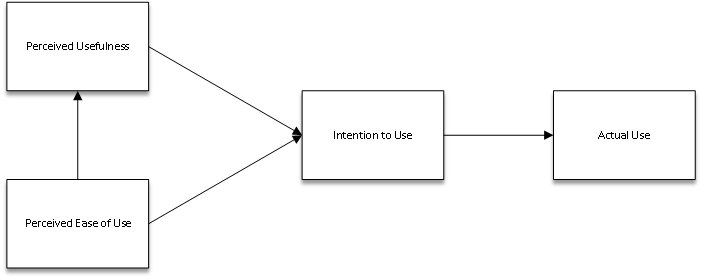
Users accept and use technology primarily based on two key factors: perceived usefulness (the degree to which a person believes the technology will enhance their performance) and perceived ease of use (the degree to which a person believes using the technology will be effortless).
Pitfalls of Technology
Digital technologies are algorithm-driven that automate various marketing processes by embedding business objectives in them programmatically.
When multiple brands deploy the same technology for their digital marketing strategies, it may create a risk of digital homogenization.
- Also referred to as algorithmic monoculture and the associated risk as outcome homogenization
- It may lead to similar customer experiences across brands, reducing differentiation and competitive advantage.
Algorithm Aversion: Consumers have a general tendency to distrust and reject outcomes from algorithms, even if they outperform human outputs, due to various psychological factors, such as lack of trust in machines and algorithms or low expectations about their capabilities and functioning .
Thank You!
🙏
Q&A

Social Technology